


BLOG

Get the latest information about ULTIMEA.
Blog Tags
3D sound(1) 5.1.2 vs 7.1.4(1) Apollo P40(1) audio tips(1) AUX vs Optical audio quality(1) beginner guide(1) best home projector(1) Best way to connect AV receiver(1) Bluetooth(1) Bluetooth 5.0(1) Bluetooth 5.3(1) Bluetooth 5.4(1) Bluetooth speaker pairing(1) CEC feature explained(1) CEC for beginners(1) CEC setup guide(1) ceiling reflection(1) connectivity(1) DLP(1) Dolby Atmos(3) Dolby Atmos HDMI connection guide(1) eight channels(1) HDMI ARC(1) HDMI ARC Dolby Digital setup(1) HDMI CEC(1) HDMI device control(1) HDMI eARC(1) home audio(1) home audio upgrade(1) Home theater audio setup guide(1) home theater guide(1) home theater tips(1) How to connect soundbar to TV(1) How to use CEC(1) laser projector(1) LE Audio(1) Lossless audio HDMI vs Optical(1) movie night(1) Multi-channel audio connection guide(1) one remote control(1) Optical cable home theater setup(1) outdoor movie setup(1) party speakers(1) portable projector(1) portable speakers(1) Poseidon E100(1) projector technology(1) Skywave Series(1) Skywave X40(1) Skywave X70(1) smart home(1) sound quality(1) sound quality improvement(1) soundbar buying guide(1) soundbar guide(1) soundbar power(1) soundbar tips(1) soundbar watts(1) stereo sound system(1) subwoofer placement(1) surround sound comparison(1) Surround sound connection tips(1) TV and soundbar sync(1) TV audio control(1) TV audio settings(1) TV to soundbar connection methods(1) TWS speakers(1) Ultimea(1) Ultimea Go Jerry Can(1) Ultimea Skywave X(1) up-firing speakers(1) What is CEC(1) wireless stereo(1) wireless surround system(1)

Understanding DLP Projection Technology: How It Transforms Your Home Theater Experience.

Understanding DLP Projection Technology: How It Transforms Your Home Theater Experience.
When choosing a projector, most people focus on brightness, resolution, or price. But the real magic lies in the display technology behind the image. You may have seen terms like DLP, LCD, or LCoS — but what do they actually mean? And why is DLP becoming the preferred choice for home theater lovers? Let’s dive deeper into DLP projection technology and find out what makes it special.

What Is DLP Technology

DLP, short for Digital Light Processing, was developed by Texas Instruments. It uses a Digital Micromirror Device (DMD) chip to control how light forms the image you see on screen.
You can imagine the DMD chip as a stage filled with thousands of tiny mirrors, each one acting like a performer. When the mirror tilts toward the light, it reflects brightness onto the screen, like a performer stepping into the spotlight. When it tilts away, the pixel turns dark, like the performer stepping back into the shadows. By flipping these mirrors thousands of times per second, the projector creates detailed shades and smooth motion.

How DLP Creates Color

A DLP projector typically uses an RGB color wheel. Light passes through the spinning color segments before hitting the mirrors. Imagine a painter rapidly switching between red, green, and blue paints to mix the perfect tone for every pixel.
More advanced DLP projectors use LED or laser light sources instead of a color wheel. These offer richer colors, higher brightness, and better uniformity, making the final image look more vivid and natural.

DLP vs Other Projection Technologies

Compared with other projection technologies, DLP stands out in several ways. LCD projectors are known for bright and colorful images, but they can sometimes show a visible grid pattern and tend to be bulkier. LCoS projectors deliver smooth and detailed images, but they are often expensive and less bright.
DLP projectors, on the other hand, offer high contrast, sharp images, smooth motion, and a compact design. In simple terms:
  • LCD is like a mosaic — colorful but with visible lines up close
  • LCoS is like an oil painting — beautifully detailed but costly
  • DLP feels like watching a movie on a cinema screen — bright, crisp, and dynamic
This balance of performance and practicality is why DLP projectors dominate the home theater and portable projector markets today.

Why DLP Matters

For any projector, image clarity, brightness, and color accuracy are key. DLP technology makes a difference in three major ways.
It delivers smooth motion because of the high-speed mirror switching that reduces motion blur.
It produces precise and realistic colors when paired with LED or laser light sources.
It keeps the projector compact and reliable, making it suitable for living rooms, offices, or outdoor setups.
If you care about crisp, lifelike visuals, DLP is the foundation of a true home theater experience.

Where Technology Meets Experience: Ultimea Poseidon E100

Now that you understand how DLP works, let’s look at how the Ultimea Poseidon E100 brings this technology to life.
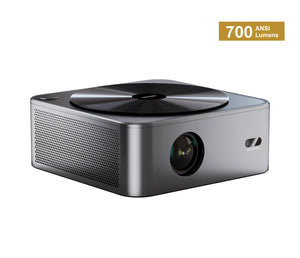
With 1800 lumens of brightness, it delivers clear and vivid images whether you’re watching during the day or at night. Its true DLP projection ensures sharp details and accurate colors. The compact and stylish design fits easily into any space, and the simple plug-and-play setup makes it effortless to use.
Whether you are watching movies, gaming, or hosting a family night, the Poseidon E100 creates a cinematic experience right at home.

Final Thoughts

When choosing a projector, brightness numbers only tell part of the story. The real difference comes from the display technology inside. DLP projectors combine clarity, vivid color, and smooth motion in a way that makes every scene come alive.
If you’re looking for a projector that turns your living room into a true theater, the Ultimea Poseidon E100 is designed to make that happen with ease.


Related Products
Blog Tags
3D sound(1) 5.1.2 vs 7.1.4(1) Apollo P40(1) audio tips(1) AUX vs Optical audio quality(1) beginner guide(1) best home projector(1) Best way to connect AV receiver(1) Bluetooth(1) Bluetooth 5.0(1) Bluetooth 5.3(1) Bluetooth 5.4(1) Bluetooth speaker pairing(1) CEC feature explained(1) CEC for beginners(1) CEC setup guide(1) ceiling reflection(1) connectivity(1) DLP(1) Dolby Atmos(3) Dolby Atmos HDMI connection guide(1) eight channels(1) HDMI ARC(1) HDMI ARC Dolby Digital setup(1) HDMI CEC(1) HDMI device control(1) HDMI eARC(1) home audio(1) home audio upgrade(1) Home theater audio setup guide(1) home theater guide(1) home theater tips(1) How to connect soundbar to TV(1) How to use CEC(1) laser projector(1) LE Audio(1) Lossless audio HDMI vs Optical(1) movie night(1) Multi-channel audio connection guide(1) one remote control(1) Optical cable home theater setup(1) outdoor movie setup(1) party speakers(1) portable projector(1) portable speakers(1) Poseidon E100(1) projector technology(1) Skywave Series(1) Skywave X40(1) Skywave X70(1) smart home(1) sound quality(1) sound quality improvement(1) soundbar buying guide(1) soundbar guide(1) soundbar power(1) soundbar tips(1) soundbar watts(1) stereo sound system(1) subwoofer placement(1) surround sound comparison(1) Surround sound connection tips(1) TV and soundbar sync(1) TV audio control(1) TV audio settings(1) TV to soundbar connection methods(1) TWS speakers(1) Ultimea(1) Ultimea Go Jerry Can(1) Ultimea Skywave X(1) up-firing speakers(1) What is CEC(1) wireless stereo(1) wireless surround system(1)
Recent News
Want Great Sound? Don’t Ignore These 5 Setup Details

Want Great Sound? Don’t Ignore These 5 Setup De...

By Liz Wu

Getting a new soundbar is exciting — but great sound doesn’t just come from the hardware. The real difference comes from how you set it up. Even a powerful system can...

Read More

Want Great Sound? Don’t Ignore These 5 Setup De...

By Liz Wu

Getting a new soundbar is exciting — but great sound doesn’t just come from the hardware. The real difference comes from how you set it up. Even a powerful system can...

Read More
Modern living room home theater setup with a soundbar under the TV, showcasing a spacious environment ideal for comparing 5.1.2 and 7.1.4 surround sound systems

5.1.2 vs 7.1.4: What’s the Difference? How to U...

By Liz Wu

Introduction If you have been looking into home theater systems or soundbars recently, you might have come across numbers like 5.1.2 and 7.1.4. At first glance, they can look confusing...

Read More

5.1.2 vs 7.1.4: What’s the Difference? How to U...

By Liz Wu

Introduction If you have been looking into home theater systems or soundbars recently, you might have come across numbers like 5.1.2 and 7.1.4. At first glance, they can look confusing...

Read More
Social Media

Hinterlasse einen Kommentar

Bitte beachte, dass Kommentare vor der Veröffentlichung freigegeben werden müssen.