











From barely audible whispers to sudden, room-shaking impact, sound can turn an ordinary horror movie night into an experience you feel all around you.
I recently watched Obsession, and what stayed with me most was not one particular image. It was the sound.
A familiar voice began to feel strangely unnatural. Quiet moments made every breath and movement seem important. When the silence finally broke, the entire theater seemed to react at once.
Written and directed by Curry Barker, Obsession follows a hopeless romantic who uses the mysterious “One Wish Willow” to win his crush’s heart, only to discover that getting exactly what he wants comes with a dark price. The film was officially released as a horror movie on May 15, 2026, according to Focus Features.
Watching it was a reminder that horror is not created only by what appears on the screen. It is also created by what we hear around it.
And this is not unique to Obsession. Across psychological horror, supernatural stories, monster movies, home-invasion films and slashers, filmmakers use voices, silence, space, music and low frequencies to make audiences fear what they cannot yet see.
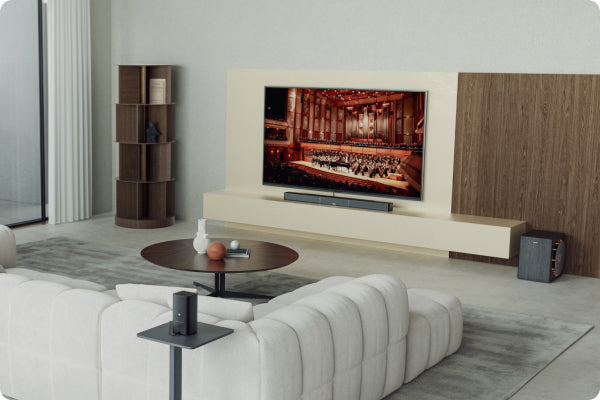
A capable soundbar can bring more of that experience into the home—not simply by making a movie louder, but by preserving the details, direction and contrast that make horror effective.
A Voice Can Warn Us Before the Image Does
In Obsession, an ordinary conversation becomes unsettling when Nikki’s voice begins to sound repetitive and unnatural. The scene does not initially depend on a dramatic jump scare or violent image. The warning is already present in her delivery.
Her rhythm changes. Her tone no longer matches the situation. Someone familiar suddenly sounds unfamiliar.
This technique appears throughout the horror genre. A possessed character may speak with an unusual texture. A quiet whisper may feel uncomfortably close. A breath may continue slightly too long. Even a simple sentence can become threatening when it is delivered with the wrong emotion.
These details matter because the human voice carries more than words. It communicates distance, intention, stress and emotional control. When any of those qualities feel wrong, we sense danger before the story confirms it.
Basic TV speakers can make subtle vocal details sound thin or allow them to become buried beneath music and environmental effects. A soundbar can bring dialogue forward, making quiet speech, strained breathing and small changes in tone easier to hear.
If the system includes a dedicated center channel or dialogue enhancement, voices can also remain clearer without requiring the viewer to increase the overall volume.
For horror movies, clearer dialogue is not only about following the story. It is about hearing the warning hidden inside the words.
Silence Makes Us Listen for Danger
Silence is one of the most powerful tools in horror.
When the soundtrack becomes quiet, viewers begin searching for information. We notice breathing, fabric moving, a distant floorboard or something shifting beyond the edge of the frame.
The absence of an obvious sound makes every smaller sound feel more important.
This technique works across many types of horror. In a supernatural movie, the room may become unnaturally quiet before an apparition appears. In a home-invasion story, a character may stop moving to listen for someone elsewhere in the house. In a creature feature, the disappearance of normal environmental sounds can signal that something is approaching.
A sound system needs both clarity and dynamic range to reproduce this tension successfully.
Quiet details should remain audible without being exaggerated. When the danger finally arrives, the system must also preserve the sudden change from restraint to impact.
If quiet and loud moments are compressed into a similar volume range, the scene loses part of its tension. The audience can hear what happens, but may not feel the contrast that makes it frightening.
A capable soundbar allows silence to remain suspenseful and the sound that follows it to feel genuinely sudden.
The jump scare is only the release. The fear begins in the quiet moment before it.
Off-Screen Sound Expands the Threat
A television can only show what fits inside the frame. Sound can suggest an entire world beyond it.
Footsteps can approach from another room. A door can close somewhere behind a character. A voice can appear from a dark hallway before anyone enters the shot.
Because the source is not visible, the viewer instinctively searches for it.
This is especially effective in horror because uncertainty allows the imagination to participate. A clearly visible threat has defined limits. An unseen sound could come from almost anywhere.
Standard TV speakers tend to keep most sounds close to the screen. Even when the soundtrack suggests that something is happening elsewhere, the audio may still seem to originate from the same narrow area beneath the picture.
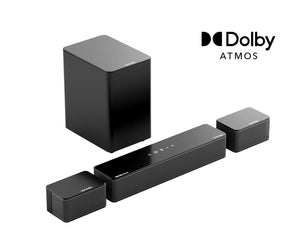
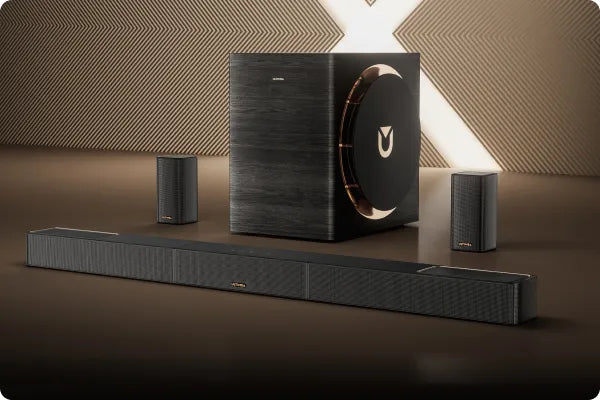
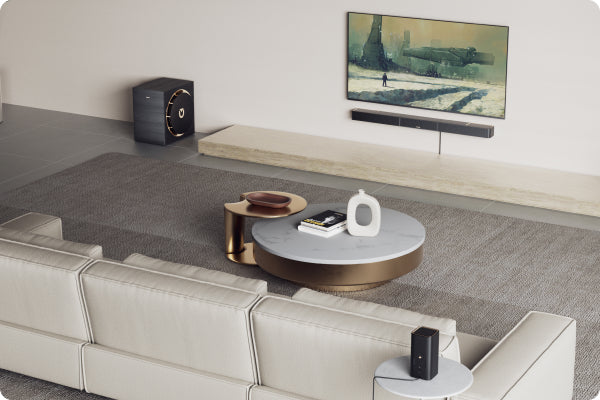
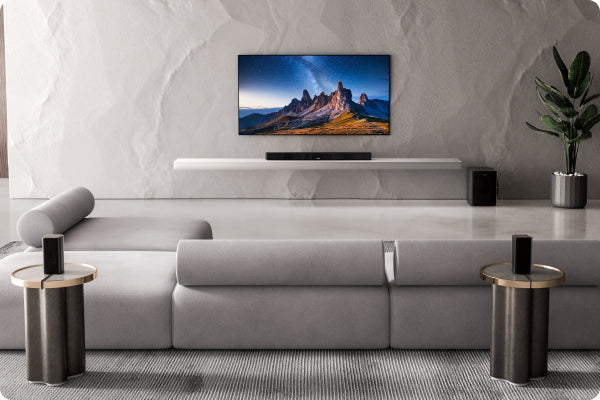
A soundbar can create a wider soundstage, allowing sounds to feel more separated from the center of the television. Systems with physical rear speakers can extend that space farther, placing movements and environmental effects beside or behind the listening position.
Footsteps can travel across the room instead of simply increasing in volume. A whisper can appear outside the frame. The space behind the sofa can begin to feel connected to the world of the movie.
This effect depends more on direction than loudness. Making every sound louder does not necessarily make it more frightening. Convincing placement is what makes the threat feel closer.
A good soundbar does not just reproduce the horror movie. It allows the room around the viewer to become part of it.
Music Can Turn Safety into Suspense
Horror music does not always sound frightening from the beginning.
Sometimes the most disturbing scores start with something warm, nostalgic or familiar. As the story changes, that same musical idea begins to feel less comforting.
A note lasts too long. A melody repeats without resolving. A low tone slowly enters beneath the music. The rhythm becomes less stable, or the score suddenly stops at a moment when the viewer expects it to continue.
Obsession uses this contrast particularly well, transforming the emotional language of romance into something increasingly claustrophobic and threatening. However, the same method can be found throughout the horror genre.
Supernatural films often use children’s songs or music boxes because they combine familiarity with vulnerability. Psychological horror may distort everyday sounds until they no longer feel natural. Monster movies frequently use deep drones to suggest a presence too large or distant to see.
For these techniques to work at home, the different parts of the soundtrack need room to breathe.
Clear sound separation helps dialogue, music and environmental effects remain distinct as tension builds. A wider soundstage allows the score to expand beyond the center of the screen, while controlled low frequencies add pressure beneath the scene.
The bass should support the music without burying the voices or smaller sounds around it.
When reproduced well, horror music does more than tell us that danger is coming. It changes how we feel about a place that seemed safe only moments earlier.
Bass Makes Fear Physical
Low frequencies give horror a physical dimension.
A deep drone can create pressure before anything appears. Heavy footsteps can communicate the weight of an unseen creature. A heartbeat can gradually accelerate until the audience begins to feel the character’s panic.
When the tension finally breaks, a door slam, explosion or sudden impact can be felt through the sofa and floor as well as heard.
However, more bass does not automatically create more fear.
If heavy low-frequency effects continue throughout an entire scene, the audience becomes accustomed to them. Excessive bass can also mask the quieter details that create suspense, including breathing, movement and subtle environmental sounds.
The real power of bass comes from timing and contrast.
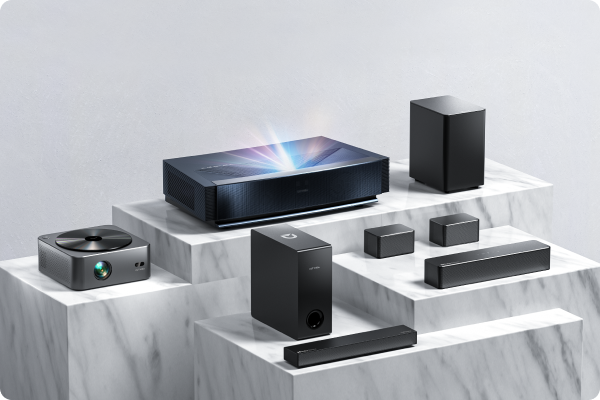
A dedicated subwoofer, if available, can give impacts greater weight while allowing the soundbar to focus on voices and other frequencies. The bass level should be strong enough to support the scene, but controlled enough to preserve clarity.
The most effective low-frequency moment is often the one that arrives after the audience has been listening to almost nothing.
Why Horror Movies Can Expose the Limits of TV Speakers
Modern televisions are becoming thinner, leaving limited space for larger speaker drivers and convincing channel separation. While built-in speakers may be sufficient for casual viewing, horror soundtracks can reveal their limitations.
| Horror sound technique | Common TV speaker limitation | What a soundbar can improve |
|---|---|---|
| Whispers and unusual vocal tones | Dialogue can sound thin or unclear | More focused and intelligible voices |
| Quiet movement in dark scenes | Small details may disappear | Greater clarity at lower volumes |
| Off-screen footsteps and voices | Sound remains close to the TV | A wider, more directional soundstage |
| Layered music and effects | Different elements blend together | Clearer separation and definition |
| Silence followed by sudden impact | Limited dynamic contrast | A more convincing change in intensity |
| Deep drones, heartbeats and impacts | Limited low-frequency extension | Greater weight and physical presence |
The goal is not to make every moment bigger. It is to preserve the details, space and contrast that allow fear to build.
Best Soundbar Settings for a Horror Movie Night
A few simple adjustments can help create a more immersive horror movie experience at home.
1. Start with Movie or Surround Mode
Movie, Cinema or Surround mode is usually the best starting point. These modes are generally designed to create a wider soundstage and make better use of the available channels.
If both the movie and your system support an immersive audio format, select the corresponding audio track on the streaming platform or disc.
2. Complete Room Calibration
If room calibration is available, run it from the main viewing position. Calibration can adjust channel timing and levels according to the room layout, helping dialogue remain centered and surrounding effects arrive from more convincing locations.
3. Keep Whispers Clear
If quiet dialogue is difficult to understand, slightly increase the center-channel level or enable dialogue enhancement, if available.
Avoid immediately raising the overall volume. The next sudden effect may become much louder than expected.
4. Use Bass in Moderation
Begin with the subwoofer at a moderate level and increase it gradually. Bass should add weight to music, footsteps and impacts without covering voices or smaller environmental details.
Constant, overwhelming bass can make a horror soundtrack less effective.
5. Check the Surround Speaker Placement
If the system includes rear speakers, place them beside or slightly behind the main listening position. Avoid hiding them completely behind furniture, but do not place them so close that one speaker becomes distracting.
The goal is to create a surrounding space, not to draw attention to the speakers themselves.
6. Turn Off the TV Speakers
Playing the TV speakers and soundbar simultaneously can create echo, timing differences or unclear dialogue. Select the external audio system in the television’s sound settings.
7. Use Night Mode When Needed
Night Mode can make late-night viewing more comfortable by reducing extreme changes between quiet dialogue and loud effects.
It may soften some of the intended impact, but it can prevent constant volume adjustments when other people are sleeping.
Fear Begins Before You See It
Watching Obsession reminded me that horror rarely begins with the image hidden in the darkness.
It begins earlier.
It begins with a familiar voice that sounds slightly wrong. A room becoming unnaturally quiet. A melody that no longer feels comforting. A faint movement whose source cannot be seen.
These techniques extend far beyond one movie. They are part of the language of horror—the way filmmakers make audiences anticipate danger before revealing it.
A soundbar can bring more of that language into the home by making quiet details clearer, expanding sounds beyond the television and preserving the contrast between suspense and impact.
The result is not simply a louder horror movie.
It is a room that feels less safe.
Discover how better sound can transform your next horror movie night.

