











You Don’t Notice It—Until You Do
For most people, TV sound feels perfectly acceptable. You can hear the dialogue, follow the storyline, and enjoy your favorite shows without thinking too much about the audio itself. On the surface, nothing seems wrong.
And yet, small frustrations tend to appear over time. You may find yourself turning on subtitles more often than you’d like, simply to catch what characters are saying. You might also notice that you’re constantly adjusting the volume, lowering it during loud action scenes and raising it again during quiet conversations. These habits feel normal, but they point to something deeper.
What many people assume is a content issue is actually a sound issue. The limitation isn’t how loud your TV can get, but how the sound is delivered in the first place. Once you begin to notice this, it becomes clear that the difference isn’t about volume at all, but about the structure and quality behind it.
TV Sound: Designed Around Limitations
Modern televisions are designed with visuals as the top priority. Screens have become larger, sharper, and thinner than ever before, but that ultra-slim design leaves very little room for high-quality audio components.
Because of this, the built-in speakers inside most TVs are small and constrained. They are often positioned downward or toward the back, which means the sound has to bounce off surfaces before reaching you. This reduces clarity and weakens the overall presence of the audio. At the same time, the limited internal space prevents proper resonance, which is why low frequencies—like bass—feel almost nonexistent.
The result is a sound profile that works, but lacks depth and dimension. Everything feels compressed into a narrow range, as if the entire audio experience is coming from a single point on the screen. It’s not that TV sound is inherently bad—it’s simply restricted by design choices that prioritize form over audio performance.
Why We Love Watching Movies in Theaters
If TV sound represents convenience, then the cinema represents immersion. Even today, when home setups are more advanced than ever, many people still choose to watch movies in theaters. While larger screens certainly help, they are not the main reason people keep going back.
Sound is what truly sets the experience apart.
In a theater, audio is not confined to a single direction. It surrounds you, fills the room, and moves with the action on screen. Dialogue remains clear, yet it doesn’t feel detached from the environment. Background sounds, music, and effects blend together in a way that creates a sense of presence rather than separation.
This is why scenes feel more intense, more emotional, and more engaging in a cinema setting. You’re not just observing what’s happening—you feel placed inside it. The environment reacts with the story, and sound becomes a key part of that immersion. That difference is not subtle, and once you’ve experienced it, it becomes difficult to ignore.
What Changes When Sound Has Space
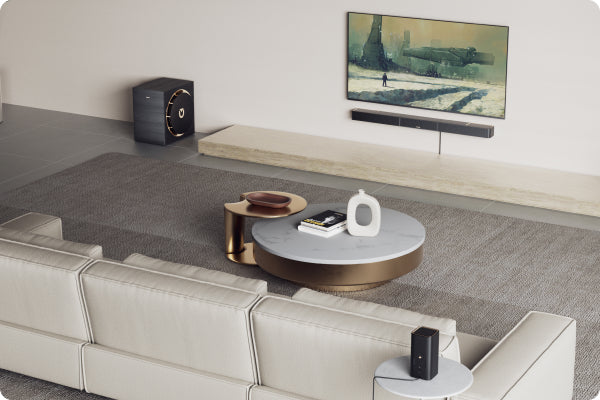
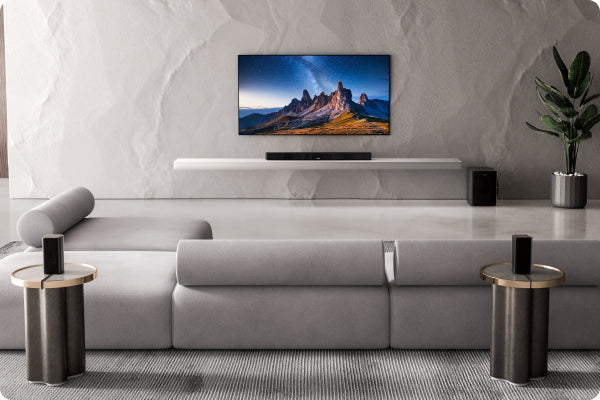
The core difference between TV audio and a more immersive sound experience comes down to space. When sound is no longer confined within the physical limits of a television, it begins to open up in noticeable ways.
First, you start to perceive depth. Sounds no longer sit on a flat layer but instead exist at different distances. Some feel close and immediate, while others fade naturally into the background, creating a more realistic environment.
Second, sound becomes directional. Instead of everything coming from the center of the screen, audio spreads across a wider field. You begin to sense where sounds originate and how they move, which adds a layer of realism that flat audio simply cannot provide.
Finally, sound gains a physical quality. Low frequencies introduce weight, giving music and effects a sense of presence that you can almost feel. This adds emotional impact, especially in scenes that rely on atmosphere or intensity. At this point, sound is no longer just something you hear, but something you experience as part of the space around you.
Where Soundbars Come In
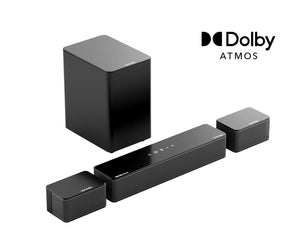
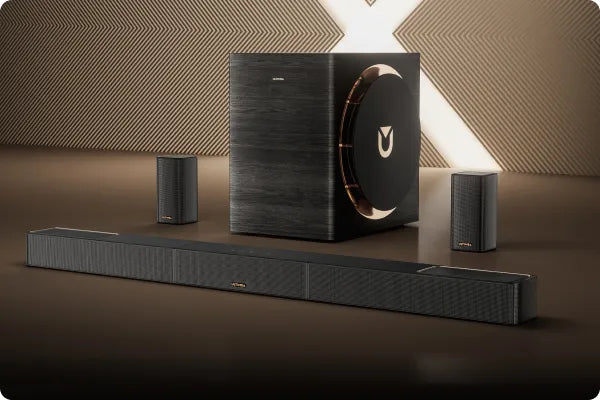
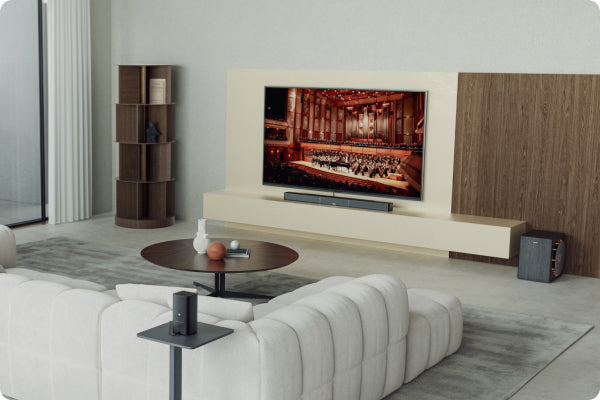
The immersive quality of cinematic sound is built on one simple principle: audio should exist in space, not be confined to a single source. In a home environment, this is where soundbars begin to play a meaningful role.
By moving sound beyond the limitations of the TV’s internal speakers, a soundbar allows audio to expand outward and develop a sense of width. It creates separation between different elements, making dialogue clearer while giving background sounds room to breathe. Instead of everything blending together, each layer of sound becomes more distinct and easier to follow.
More importantly, it introduces a sense of presence that standard TV audio lacks. The sound feels less like it’s coming directly from the screen and more like it’s filling the room around you. This shift may seem subtle at first, but it significantly changes how content is perceived and experienced.
Why the Difference Is Easy to Miss
Despite these differences, many people never actively notice what they are missing, largely because of how quickly we adapt. When you listen to the same type of audio every day, it becomes your baseline, and your brain gradually accepts it as normal.
At the same time, visuals tend to dominate attention. A high-quality picture can easily draw focus away from the limitations of sound, making it less obvious where the experience falls short.
Another reason is the lack of direct comparison. Most people rarely have the opportunity to switch between different audio setups side by side, so the contrast remains unclear. Without that reference point, the absence of depth, space, and clarity is easy to overlook.
It is only when you hear a more complete sound environment that the difference truly becomes obvious.
The Moment It Clicks
For many people, there is a moment when everything changes. It might happen at a friend’s home, in a store, or during a casual demo where a different audio setup is playing.
At first, the difference may be hard to describe, but it is immediately noticeable. Sound feels fuller, more balanced, and more natural. Details that once went unnoticed suddenly stand out, and the entire experience becomes more engaging.
What stands out most is not loudness, but richness. Audio feels more connected to the visuals, more intentional in its placement, and more immersive overall. In that moment, many people realize something simple but powerful: this is what it was supposed to sound like.
So, What Are You Really Missing?
The gap between TV sound and a more immersive audio experience is not about volume, but about completeness. What is often missing is depth, which allows sound to exist at different distances, and space, which lets audio expand beyond a single point.
It is also direction, which gives sound a sense of movement and placement, and ultimately immersion, which transforms passive watching into a more engaging experience.
Once you’ve experienced sound with space, it becomes difficult to ignore the limitations of flat audio. What once felt normal can begin to feel compressed, as if something essential has been missing all along.
And that is when you truly understand the difference.

