










Choosing between a soundbar and bookshelf speakers is not really about finding the one “better” product. It is about choosing the setup that fits your room, your habits, your content, and how much control you want over your sound.
A soundbar can be the easiest way to improve TV audio with a clean, compact setup. Bookshelf speakers can be a great choice when you want more left-right separation, a more traditional stereo layout, or a setup that works well for music and personal listening spaces.
Both can be good choices. The right one depends on what you want your audio system to do every day.
The Simple Difference
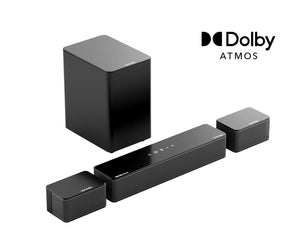
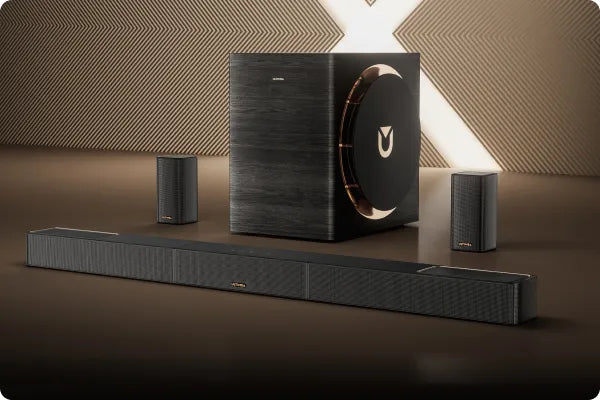
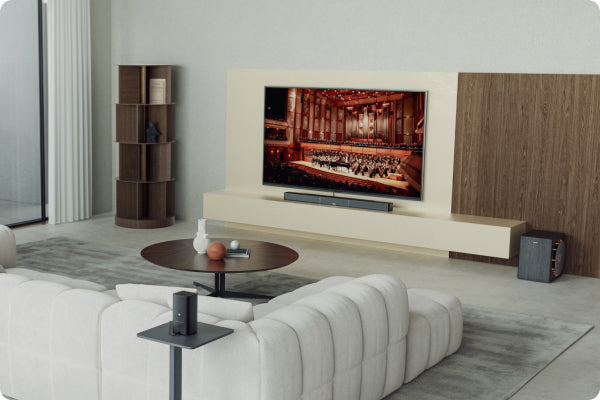
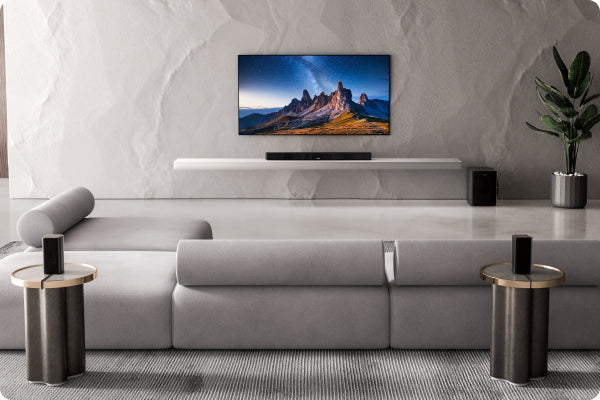
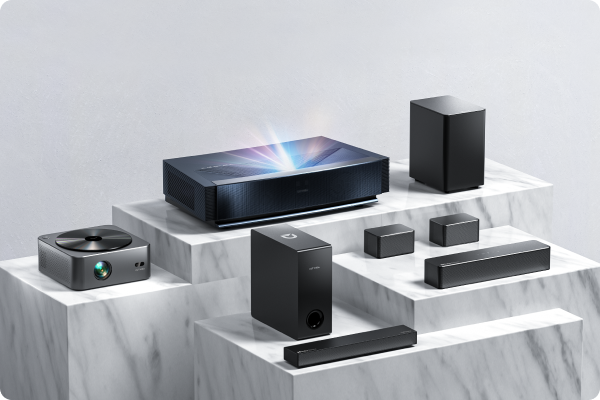
A soundbar is usually a single long speaker designed to sit below or near your TV. It is often built for TV shows, movies, streaming, gaming, and living room convenience. Many soundbars also include features such as dialogue enhancement, surround effects, night mode, app control, or optional subwoofers and surround speakers.
Bookshelf speakers are usually a pair of speakers placed to the left and right of the listening area. They are often used for music, desktop listening, stereo TV setups, gaming desks, bedrooms, and smaller media spaces. Some bookshelf speakers are passive and need an amplifier, while powered bookshelf speakers include built-in amplification and can connect directly to audio sources.
The main difference is layout. A soundbar is compact and TV-centered. Bookshelf speakers create a wider left-right stereo image and usually need more placement space.
Quick Comparison Table
| Choose a soundbar if... | Choose bookshelf speakers if... |
|---|---|
| Your TV is the main audio source | Music is a major part of your listening |
| You want a simple, clean setup under the TV | You want stronger left-right stereo separation |
| You prefer fewer visible speakers and cables | You have space to place two speakers properly |
| You watch a lot of movies, shows, and sports | You listen at a desk, in a bedroom, or in a music corner |
| You want dialogue modes, night mode, or surround effects | You want a more traditional stereo speaker layout |
| You want quick setup for a living room | You want more placement flexibility and sound control |
This table is not a rulebook. It is a starting point. Many people can enjoy either setup, but the right fit becomes clearer when you think about your main use case.
When a Soundbar Makes More Sense
Your TV Is the Center of the Room
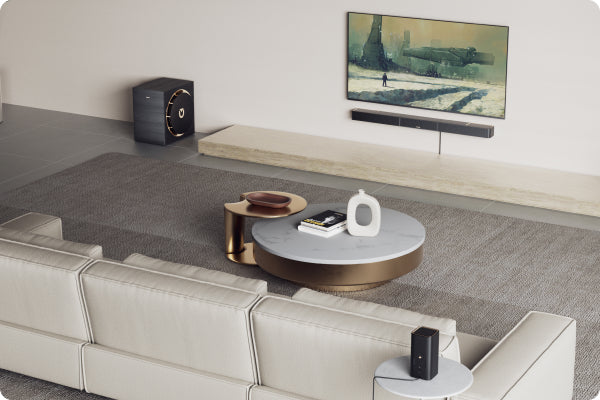
If most of your audio comes from your TV, a soundbar is often the most practical choice. It fits naturally below the screen and keeps the sound visually connected to what you are watching.
For everyday streaming, movies, live sports, news, and casual gaming, a soundbar can make TV audio clearer and fuller without taking up much space.
You Want a Cleaner Setup
A soundbar is usually easier to place than two separate speakers. You do not need to find matching left and right positions, speaker stands, or a dedicated listening triangle.
For apartments, shared homes, smaller living rooms, or minimalist spaces, this can be a big advantage. A soundbar keeps the setup simple and visually tidy.
You Care About TV Features
Many soundbars are designed around TV-friendly features. These may include:
- Dialogue or voice enhancement
- Night mode
- Movie, music, sports, or game modes
- Virtual surround effects
- HDMI ARC or eARC connection
- App or remote control
If your biggest frustration is unclear TV dialogue, sudden loud scenes, or weak built-in TV speakers, a soundbar may solve the problem in the most direct way.
When Bookshelf Speakers Make More Sense
You Listen to Music Often
Bookshelf speakers are often a strong fit for music because they create a clear left and right stereo image. When placed correctly, they can make vocals, instruments, and spatial details feel more separated.
This can be especially enjoyable for albums, playlists, acoustic music, vocals, jazz, rock, electronic music, and any listening where stereo placement matters.
You Want a Personal Listening Space
Bookshelf speakers work well in spaces where you sit in a more fixed position, such as:
- A desk
- A bedroom
- A reading corner
- A small studio
- A personal music area
In these spaces, you can place the speakers around your listening position and get a more focused stereo experience.
You Have Room for Left and Right Placement
Bookshelf speakers need some space to work well. They should usually be placed with one speaker on the left and one on the right, with both aimed toward the listening area.
If you have a console, desk, shelves, or speaker stands that allow proper placement, bookshelf speakers can feel natural and balanced. If your room does not allow that, a soundbar may be easier.
Think About Your Main Content
Movies and TV Shows
If you mostly watch movies and TV from a couch, a soundbar is often the simpler match. It is built around the screen, usually connects easily to the TV, and often includes modes designed for dialogue and late-night watching.
Bookshelf speakers can also work with TV, especially if you like stereo separation and have space to place them on both sides of the screen. They may fit especially well if your TV setup is also your music setup.
Music
If music is your priority, bookshelf speakers are often worth considering first. Their left-right layout can make music feel more open and natural, especially when you sit between the two speakers.
A soundbar can still be convenient for casual music, background listening, and shared living spaces. But if you enjoy sitting down and listening closely, bookshelf speakers may match that habit more naturally.
Gaming
For console gaming on a TV, a soundbar can be simple and immersive. For desktop gaming, bookshelf speakers may be easier to place around a monitor and can provide a focused near-field experience.
The right choice depends on where you play most often.
Everyday Background Audio
For background audio while cooking, cleaning, relaxing, or spending time with family, either setup can work. A soundbar may blend more easily into a living room. Bookshelf speakers may feel more suitable if music quality and stereo separation matter more to you.
Think About Your Room
Room layout matters as much as speaker type.
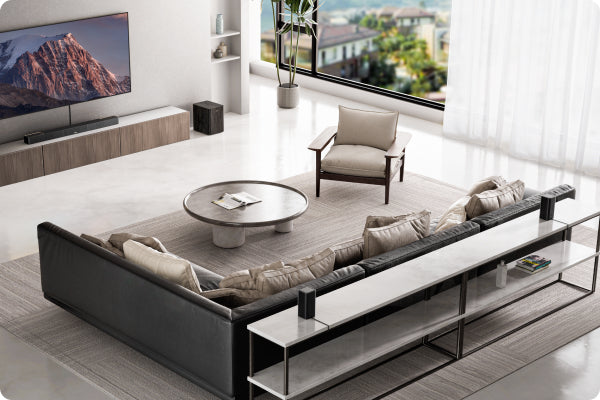
A soundbar works best when it can sit centered under the TV, facing the listener. It is usually easier to place in rooms where furniture, shelves, or wall space are limited.
Bookshelf speakers work best when you can place them apart from each other and aim them toward the listening position. They may need more space on a media console, desk, shelf, or speaker stands.
If your room is narrow, crowded, or built around one TV wall, a soundbar may be the simpler choice. If your room allows a left-right speaker layout, bookshelf speakers become more practical.
Think About Setup and Control
Soundbars are usually designed for quick setup. Many connect to the TV with HDMI ARC or Optical and can be controlled with a remote, app, or TV volume control.
Bookshelf speakers can vary more. Passive bookshelf speakers need an external amplifier. Powered bookshelf speakers are simpler because amplification is built in. Some powered models also include Bluetooth, USB, Optical, HDMI ARC, app control, or EQ settings.
If you want the least complicated path, a soundbar may feel easier. If you do not mind placing two speakers and want a more stereo-focused setup, powered bookshelf speakers can also be approachable.
Where a 3-Way Bookshelf Speaker Fits
If your needs lean toward bookshelf speakers, Ultimea BS-3 3-Way Bookshelf Speakers, Ultimea’s first 3-way bookshelf speaker system, are designed with dedicated drivers for highs, mids, and lows. They are a good fit for users who want clearer sound separation, music-friendly stereo listening, flexible connections such as HDMI ARC, Optical, RCA, USB, Bluetooth 6.0, and Auracast, plus custom high/mid/low adjustment for different rooms and listening preferences.
A Simple Way to Decide
If you are still unsure, start with your main listening habit.
Choose a soundbar if your answer is:
- “I mainly want better TV sound.”
- “I want fewer speakers and cables.”
- “I watch movies, shows, sports, and streaming content most.”
- “I need something simple for the living room.”
- “Dialogue clarity and night viewing matter to me.”
Choose bookshelf speakers if your answer is:
- “I listen to music often.”
- “I want a wider stereo image.”
- “I have space for left and right speakers.”
- “I want speakers for a desk, bedroom, or music corner.”
- “I like adjusting sound to match my room and taste.”
The goal is not to pick the product with the longest feature list. The goal is to choose the setup that matches how you actually listen.
Final Thoughts
Soundbars and bookshelf speakers solve different listening needs. A soundbar is often the easiest upgrade for TV-centered rooms, especially when you want a clean setup and convenient features. Bookshelf speakers are often a natural match for music-focused spaces, stereo listening, desktops, and rooms where you can place two speakers properly.
Neither format is automatically better. The right choice is the one that fits your room, content, setup preference, and daily listening habits.
If you choose based on how you actually use your space, you are much more likely to end up with audio that feels natural, useful, and enjoyable every day.

